
Contents
Picture the exact second your toddler spots an older kid tearing past on a bike, stops mid-stride, and turns to you with that unmistakable look that means one thing: I want to do that too. It’s a small moment, but it tends to catch parents off guard, because one day your child is wobbling around on two unsteady legs, and the next they’re begging for wheels of their own.
Once that moment hits, most parents head straight to the internet, and browsing children’s bikes for your little one can turn into a much bigger endeavour than expected. There’s no single correct answer, since it depends on your child’s age, their size, and quite frankly, their mood on any given day.
What Are the Different Types of Kids’ Bikes?
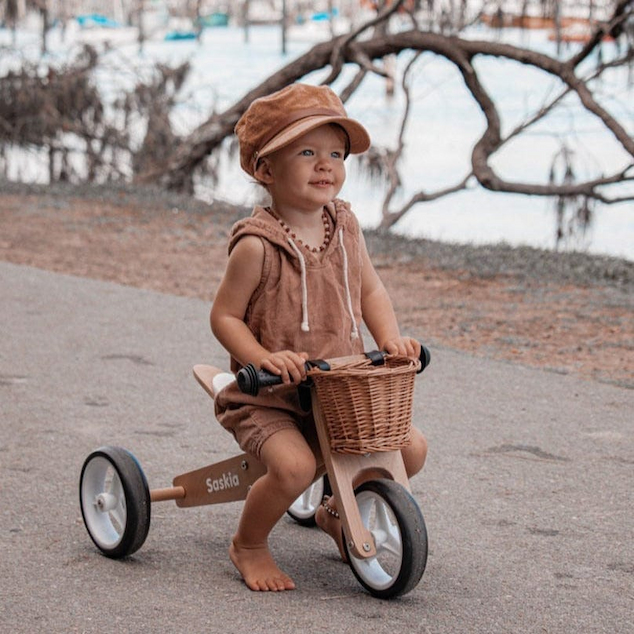
Kids’ bikes and ride-ons aren’t really one category. They’re more like a ladder of stages, and each rung offers a different level of balance, strength, and confidence.
Baby Walkers and Push-Along Ride-Ons
Best for: Babies and young toddlers who are learning to stand, walk, and explore movement on their own.
Before your child ever swings a leg over a trike or bike, there’s a stage that often gets skipped: the baby walker or push-along ride-on. These are usually built from a soft, lightweight foam rather than wood or steel, so even a wobbly one-year-old can push one around the lounge room without much effort.
Many models start out as a walker your baby can lean on for support and later turn into a small ride-on your toddler can scoot along with their feet. The goal here is to build the balance, coordination, and independence your child will lean on for every stage that follows.
Trikes and 2-in-1 Trike-to-Balance Bikes
Best for: Toddlers around one to three years old who are ready for their first proper set of wheels but aren’t steady enough for two.
A tricycle is usually the next step, and it’s built entirely around stability. Three wheels mean your toddler doesn’t have to balance at all, they can focus on pedalling, steering, and getting used to the bike itself.
Seat heights on trikes run low, often somewhere between 22 and 40 cm off the ground, so short legs can still reach the pedals or plant their feet flat when they stop. Some trikes also come with a detachable parent handle, which means you steer from behind while your toddler gets used to pedalling and the general feel of riding.
A lot of trikes now do double duty. If you swap out the third wheel and a long axle for a short one, then the same trike turns into a balance bike once your child is ready to work on two-wheeled balance instead of three. That means you won’t be buying a whole new set of wheels every few months, just adjusting the one you’ve already got.
Balance Bikes
Best for: Toddlers and preschoolers learning to balance and steer before they ever touch a pedal.
Balance bikes strip a normal model down to the basics: two wheels, a seat, handlebars, and no pedals at all. Your child sits down, pushes off with their feet, and glides, which teaches steering and balance long before pedaling enters the picture.
Because there’s nothing to pedal, seat height matters even more here. It’s usually somewhere between 30 and 45 cm off the ground, which works for most toddlers and preschoolers, with room to adjust as they grow.
Some options even add a small footrest. Once your child gets confident, they can tuck their feet up and coast for a few seconds at a time. It’s genuinely one of the better ways to some balance that a pedal bike will later require them to have.
Skipping training wheels in favour of a balance bike first has become the more common approach among parents. The main reason is simple: kids who learn to balance before they pedal tend to pick up a normal bike faster, right around the age that training wheels would normally come off.
Scooters
Best for: Toddlers and preschoolers building coordination and steering skills through a stand-up ride, often alongside or after trikes and balance bikes.
Scooters are somewhere outside the bike-to-pedal-bike ladder, but they teach a genuinely useful skill of their own: shifting your weight to steer instead of turning handlebars. The ones for younger riders come with a parent handle attached, so you can guide and support your toddler while they get used to standing, balancing, and pushing off with one foot.
Once they’re ready to go it alone, three-wheel scooters with a low, wide deck take over, usually suited to children from around two to six years old. These use a lean-to-steer design. Your little one tips their body slightly toward the direction they want to go, instead of yanking the handlebars around. That’s why the scooter’s far harder to tip over.
The handlebar heights on most three-wheel scooters adjust from around 49 to 81 cm, so the same scooter can keep up with your child’s growth spurt over the years.
Pedal Bikes (with Training Wheels)
Best for: Children who’ve built up enough balance and leg strength to pedal, brake, and steer a real bike, with training wheels as backup while they get the hang of it.
Pedal bikes are the real thing: two wheels, a chain, and actual pedaling. Most come with removable training wheels, so your kid can start out with four points of contact on the ground and lose two of them once their balance catches up.
Wheel size often corresponds to the age range. 12-inch bikes generally suit children around three to six years old, 14-inch bikes suit about four to six years, and 18-inch bikes stretch up toward nine years old as your child grows taller and stronger. Seat heights climb along with wheel size too, moving from around 43 cm on the smallest pedal bikes up to nearly 70 cm on the bigger ones.
Weight is worth paying attention to here as well. A heavier steel-frame bike is often sturdier, but a lighter frame is easier for a young child to pedal, steer, and pick back up after a tumble. Many pedal bikes also come with two separate brakes, a hand brake at the front and a foot-operated one at the back, so your child learns both methods rather than relying on just one.
How to Pick a Bike for a Child?
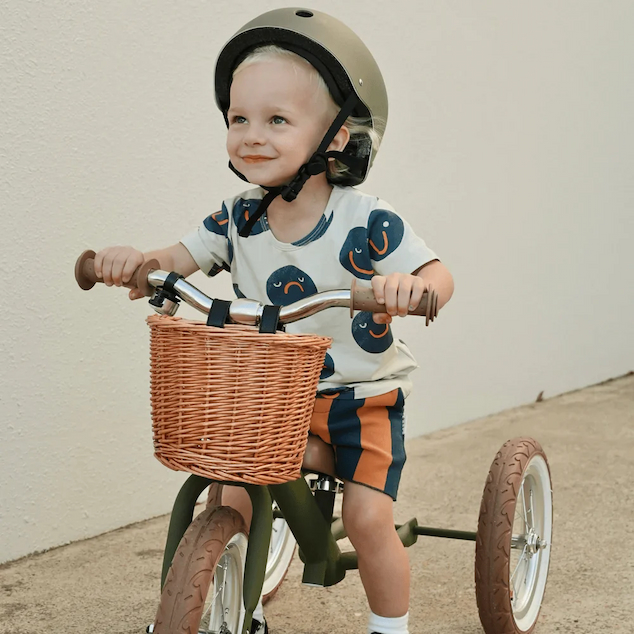
Once you know the different types, picking between the many children’s bikes on the market comes down to matching the details to your child rather than just their age on the box.
Determining the Right Size
Kids grow at wildly different rates, and a bike that’s too big or too small is a risky route to take. Start with the seat: your child should be able to sit down and place the balls of both feet flat on the ground, with just a slight bend left in their knees. When they stand over the frame, aim for around 3 to 5 cm of clearance between their body and the top bar, enough that a sudden stop doesn’t end with them straddling metal.
As a general guide, a 12-inch wheel suits a child roughly 85 to 100 cm tall. A 14-inch wheel suits around 95 to 110 cm, and an 18-inch wheel suits somewhere between 110 and 125 cm. These numbers are only a starting point though, so double-check seat height against your own child rather than trusting the number on the box alone.
It’s tempting to buy a size up so the bike lasts longer. But a bike your child has to stretch to control isn’t doing them any favours. It just makes riding harder and less fun than it needs to be.
Tyres
Tyres are easy to overlook, but they change how a bike actually feels to ride. Pneumatic, air-filled models grip the ground better and smooth out bumps, which matters once your child starts riding on footpaths, gravel, or grass instead of a flat living room floor. The trade-off is they need the occasional top-up of air and can puncture, though that’s rarely a dealbreaker at this age.
Solid rubber options, common on trikes and a lot of first pedal bikes, need no maintenance at all and won’t ever go flat, but they transmit more of every bump straight up through the frame.
For a toddler’s first trike, that stiffer ride barely registers. For a five or six-year-old covering more ground on a pedal bike, air-filled tyres usually make for a comfier ride.
Weight
As a general rule of thumb, the lighter the bike relative to your child’s size, the easier it is for them to control, especially when they’re just starting out. Toddler trikes made from birch plywood, for example, can weigh as little as 2.5 kg, while a solid steel pedal bike for an older child might weigh 9 or 10 kg.
Neither weight is wrong, they’re just suitable for different stages. But a heavy bike bought too early can leave your child struggling to steer, stop, or pick it back up after a fall. That tends to knock their confidence down more than it builds it.
Brakes and Adjustability
Younger children often don’t have the hand strength or coordination to squeeze a hand brake reliably. That’s why a lot of trikes and early pedal bikes use a back-pedal brake instead, where pushing the pedals backward slows the bike down.
As your child gets a bit older, usually from around five or six, a front hand brake becomes easier to use and starts teaching the same braking habits they’ll need on a regular bike later on.
Beyond brakes, check how much the seat and handlebars actually adjust. A bike with a wide adjustment range can keep up with a growth spurt or two before you need to replace it, which saves you money and spares you from shopping for a new bike every few months.
How to Introduce Bike Riding as a Concept
Introducing bike riding works best when it doesn’t feel like a lesson at all. Let your child sit on the bike indoors first, away from any pressure to actually go anywhere, so they can get used to the seat, the handlebars, and the general feel of it before wheels ever touch pavement.
Choose a flat, quiet spot for the first few tries, like your backyard or an empty stretch of footpath, rather than a busy park where other kids are already riding confidently. Watching bigger kids zoom past can actually work against you here, since it puts pressure on a beginner who’s still figuring out the basics.
Keep your praise focused on effort rather than speed or distance. A wobbly, three-second ride deserves the same enthusiasm as a smooth one, because what you’re really celebrating is your child’s willingness to try again after a shaky start.
If your child seems nervous, get down to their level and talk through what’s happening in simple terms: where their feet go, how to use the brake, what to do if they wobble. Some kids want you holding the back of the seat every single time. Others just want you a few steps back, watching.
Let your child guide how much support they need instead of deciding it for them. Falls will happen, and how you react to them matters more than the fall itself. A calm response, a quick check that they’re okay, and gentle encouragement to hop back on tends to teach kids that a stumble isn’t something to fear.
When It’s Time to Size Up
Kids outgrow bikes faster than almost anything else they own, often within a single year at the toddler stage. Before you rush out to buy a bigger size though, check what’s adjustable on the bike your child already has. Most trikes, balance bikes, and pedal bikes let you raise the seat and handlebars a fair amount, so a few extra cm of height doesn’t always mean a new bike is needed yet.
The clearer signs tend to come up in how your child rides. Look out for knees that knock against the handlebars with every pedal stroke. You should also be mindful of a seat that’s already at its highest setting while your child’s legs are still bent, or feet that plant flat on the ground with room to spare when they used to only reach on tiptoes.



Comments are closed.