
Contents
Welding is dangerous. It’s a process that uses electricity, extreme temperatures, and flammable gases to liquefy and permanently join metals; and if the immediate risks from electrocution, explosions, or savage burns weren’t enough, the less obvious hazards are many ways even more frightening.
Long-term exposure to intense ultraviolet and infrared radiation, airborne particulates, and the toxic fumes released from molten metals can lead to permanent injuries, blindness, or any of a long list of debilitating diseases. This isn’t the legacy that modern businesses want to inherit; and that’s why industrial and occupational operators that are looking for ways to improve workplace safety are eagerly investing in lightweight, Powered Air Purifying Respirator (PAPR) helmet systems, and ample supplies of the equipment that’s needed to support them.
Keeping Welders Safe with the Latest PAPR System Technology
Proprietary PAPR systems like 3M’s Adflo® and UNIMIG’s impressive P1004 are among the most advanced pieces of personal protective equipment (PPE) gear in the world for welders, combining auto-filtering optic technology with full head and face air filtering. These systems also utilize their own proprietary power sources, which is why it’s important for equipment owners to ensure they’re using the latest PAPR battery packs and helmet chargers for their systems.
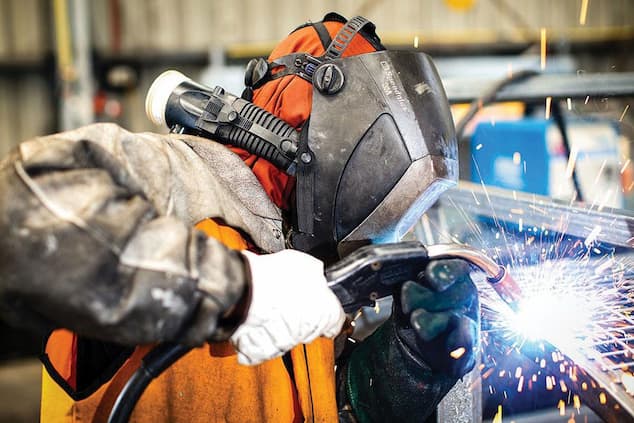
Although a lot of PAPR batteries and chargers are compatible within the same brands and series’, the danger and downtime that could result from even a single PAPR helmet not charging sufficiently isn’t a risk that you want to take. This is especially true in environments where welders are tasked with rotating between various welding processes and increasing their exposure to hazards such as:
· Harmful UV and IR radiation that could lead to severe eye, nose, and throat irritation, or even blindness;
· Burning metal fumes and chemical carcinogens that could lead to lung or kidney disease; and,
· Excessive concentrations of airborne particles and particulates that could induce cancer.
With the known risks of industrial welding already well documented, it’s important to remember that the task of reducing these risks has to begin as close to the source as possible. In work environments where there isn’t adequate ventilation to protect welders from harmful processes, or the use of toxic coatings or consumables is unavoidable, PAPR helmets are mandatory. The proper charging equipment has to be available though, which is why operators have to be sure that they’re using the most up-to-date helmet battery packs and chargers, and have an effective management system in place to control them.
Understanding What Makes PAPR Helmets So Crucial for Welders
Let’s be honest: while the widespread adoption of full-featured PAPR helmets hasn’t occurred as quickly as it should, Australian Standards (AS) AS1337 and AS1716 have been very specific about outlining the requirements for protective eyewear and respirators for welders for decades. Together with their increases in personal comfort, as well as compatibility with other PPE gear like hoods and hearing protection, the advancements in PAPR helmet arc detection and filtration technology have been instrumental to how much more accepted they’ve become.
Today’s slim profile PAPR helmets effectively provide welders with their own individualized ecosystems, with features that include:
· A Belt-mounted air purification system with climate control;
· Adjustable airflow direction and temperature settings;
· A flip-up visor with auto-darkening light recovery;
· Large viewing areas with variable colour tone controls; and,
· Fully adjustable colour shade and contrast optics.
Bluetooth connectivity even allows individual PAPR settings for shade and colour selection to be memorized on a per-process basis, making the current generation of PAPR helmets the most advanced, and the most comprehensive protective systems welders have ever had at their disposal.
The Advantages of Upgraded PAPR Batteries and Chargers
If the advancements in PAPR helmet effectiveness and reliability are to be fully appreciated, there’s no way to ignore the role that improvements in lithium-ion battery technology have played. They’re a dramatic step up from the cumbersome nickel metal cells that were commonly used to power PAPR and SAR (Supplied Air Respiratory) systems only a few years ago, and now offer an array of features that include:
· A weight reduction of up to 40% from earlier batteries;
· Run times of up to 12 hours; and,
· 1-hour rapid charges of up to 80%.
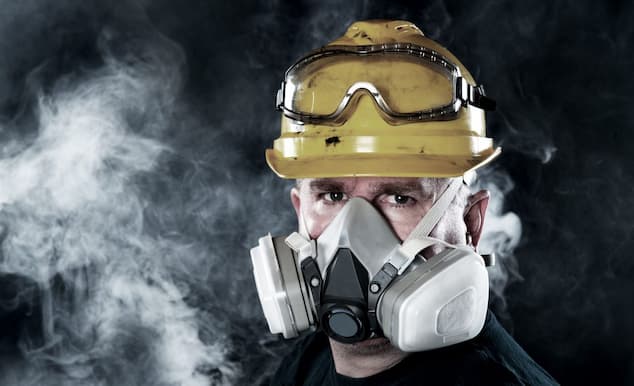
Make no mistake: these lithium-ion super-cells are purposely designed to increase welder productivity, allowing operators to push larger volumes of fresh cooling air through their respirators for longer periods of time between recharges. And when it’s time to recharge, having the most up-to-date helmet charger gives users the benefit of:
· Full standard lithium-ion battery charges in 4.5 hours;
· Full heavy-duty lithium-ion battery charges in 5.5 hours; and,
· LED indicator lights for battery charge status.
Ground-breaking respiratory charging systems like 3M’s Adflo even make battery charging possible while the battery is still attached to the filtration assembly, ensuring an absolute minimal loss in productivity while maintaining maximum protection for employees.
Proper PAPR Battery Management Ensures Maximum Reliability
While most industrial and occupational operators are inclined to cost-calculate welding strictly as a metal joining activity, pre- and post-joint preparation and finishing are also activities that necessitate the use of a PAPR helmet. That’s why lithium-ion packs for PAPRs like the Adflo are designed to provide up to 250 cycle charges; even when there’s no welding going on, they’re still expected to put in a full shift of eye and respiratory protection.
In order to get the longest-lasting and most reliable use from these specialized battery packs, battery management controls and operational guidelines need to be closely observed, especially when charging, to include:
· Ensuring batteries are charged only within their recommended charging temperature range;
· Refraining from charging batteries that are hot to the touch; and,
· Replacing battery packs whose storage capacity has dropped below 80%.
Along with not using or storing your PAPR battery packs outside of their optimal temperatures, these are simple procedures that’ll help extend battery life, as well as guarantee that welders always have safe, sufficiently charged batteries available when it’s time to connect their helmets.
The Final Word
At the end of the day, in spite of all the dangers that are an inherent part of working with molten metal, irreversible eye, lung, and organ damage doesn’t have to be a part of the equation. PAPR systems are the perfect, comprehensive wearable solution for these, as well as other occupational hazards, but they require the best power systems available to provide the longest last protection.
That’s why when your company is looking into procuring PAPR helmets, it also needs to invest in the most up-to-date PAPR batteries and helmet chargers available for those systems. It’s the only way to ensure that all of your welders and fabricators are covered by the latest in uninterrupted safety when they’re doing their job.




Comments are closed.