
Contents
Do you want to refurbish the look of your home without spending a lot of money? How about replacing the old, worn-out hardware on your sliding doors? It might not seem like much, but a few simple adjustments here and there can freshen up your home for a fraction of the price of a complete renovation. So, without further ado, let’s jump right in and take a look at some of the best ways to touch up your hardware for sliding doors and work wonders with the interior décor.
What Is Included in Sliding Door Hardware?
Sliding doors are comprised of several different hardware components, all of which work together to provide smooth and functional operation. By keeping all of these elements in good working order, you can extend the life of your doors and avoid costly repairs down the line.
Handles

Sliding door handles are one of the first places to show wear and tear. Over time, they can become loose, making it difficult to open and close the door itself. If these problems persist over time, it might be necessary to replace the handles entirely.
In general terms, there are two basic types of handles for sliding doors: flush pulls, and end pulls. As their names suggest, flush pulls are designed to sit flush with the door, while end pulls extend out from the edge of the door. The former is typically used on thinner doors, while the latter is better suited for thicker doors.
Locks
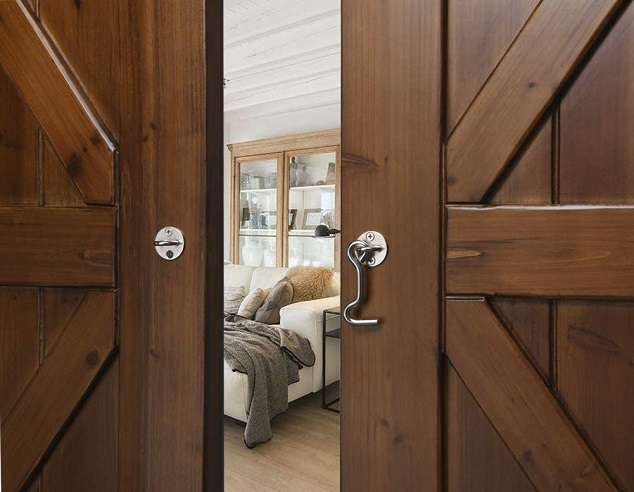
Most sliding doors come with some form of locking mechanism to keep them securely shut. Not only does this improve your home security, but it can also come in handy if you have small children or pets that you want to keep a close eye on.
Like handles, locks can also become loose over time and will need to be tightened or replaced as needed. It’s also important to make sure that the lock is properly aligned with the strike plate, as a misaligned lock can be difficult to navigate.
In most cases, in terms of suitable hardware for sliding doors here you’ll have the option to choose between a cavity and mortice lock. Cavity locks are designed to be installed within the door, which gives them a cleaner look. Mortice locks, on the other hand, are designed to be installed within the frame of the door, giving them a sturdier feel.
Lock Covers
If you want to add an extra layer of protection to your locks, you might want to consider investing in lock covers. These are designed to fit over the existing locks and provide an extra level of security.
These optional components are typically made from stainless steel or aluminium, making them both durable and weather resistant. By placing them on the outside of the door, you can also help to keep the locks themselves clean and free of debris.
Stoppers

In addition to locking mechanisms, most sliding doors also come with stoppers to help keep them securely in place. These are usually located at the top and bottom of the door to prevent it from moving too far in either direction.
As with other parts of hardware for sliding doors, it’s important to check the stoppers periodically to make sure they’re still in good condition. After all, a worn-out stopper can cause the door to move erratically, which can ultimately lead to varying levels of damage.
Tracks
The track is one of the most important parts of hardware, as it’s responsible for supporting the door itself. It’s positioned along the floor or ceiling and provides a smooth surface for the door to glide along. Using a track cover can also help to protect the track from dust and debris.
Brackets

Last but not least, brackets are used to secure the door to the frame. These are usually made from metal and can be found at the top and bottom end of the structure.
Make sure you place the brackets in the correct position, as they’re responsible for bearing the brunt of the door’s weight. If they’re not installed correctly, it can put undue stress on the frame and cause it to warp over time.
Key Considerations
When shopping for new sliding door hardware you should keep a few major factors in mind to ensure you’re making the best decision for your needs.

Weight and Size of Door
The overall weight and size of your door will dictate the type of track you need, as well as the strength of the brackets. Heavier doors, for instance, will require a sturdier track that can support the additional weight. On the flip side, lighter models can get by with a somewhat flimsier track.
Moreover, you should pay close attention to the dimensions of your door to make sure the new hardware will be compatible. Incompatible parts can cause significant installation problems and even potential malfunctions down the line.
Style and Finish
Finally, the way the hardware looks is also worth considering. In many cases, you’ll be able to find components that closely match your existing decor style. There are a number of finishes to choose from, including brushed nickel, bronze, and chrome. If you want the hardware to blend in with the rest of the door, opt for a finish that closely resembles the base material. For example, if your door is made from wood, choosing a finish like oil-rubbed bronze can give it a more cohesive look.




Comments are closed.