
Contents
Air compressors are indispensable tools with hundreds of uses in as many fields. Small 12V compressors are used to inflate tyres, larger portable and cordless compressors can power a range of pneumatic tools, and huge screw or rotary compressors are used in large production facilities, aeroplane engines, gas and oil operations and more. The wide variety means there’s the right compressor for any need.
Compressor Basics

Compressors are essentially pumps that draw outside air and pressurise it in a tank or reservoir. This then can be used as a power source for different tools and equipment. To do this, compressors rely on an external power source – either a mains supply in electric variants, portable battery packs used in a cordless air compressor, or diesel or petrol motors in larger piston and screw compressors. Each type also varies in the amount of pressurised air it can generate and this dictates how and where it can be used, the overall size and weight, and of course price. If you’re looking for an affordable and portable solution that can power a range of air tools in sites without a power source, then your best bet is going cordless.
Why Choose a Cordless Compressor?
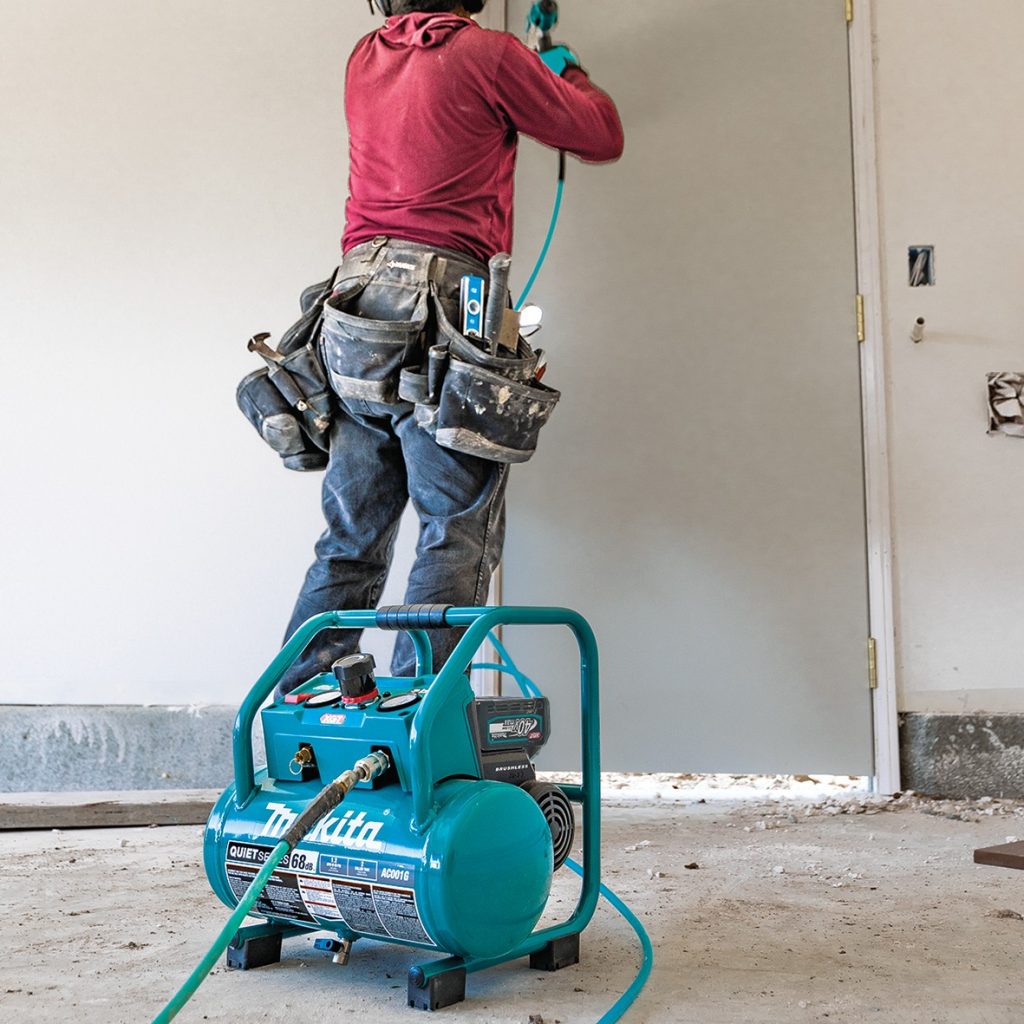
Cordless types are relatively new on the market, and making inroads into the sales of conventional piston compressors running on petrol or diesel. They’re small, compact and lightweight, but now benefit from improved brushless motors and beefy lithium-ion batteries to create high air pressure and the airflow needed to run demanding power tools. With no cords or fuel, this means several key advantages over other types:
- Unmatched portability – no power socket, no worries. Battery tech has improved at light speed and offers much-improved power levels and run times, so you can use a cordless air compressor anywhere, including remote sites missing a mains connection. The low weight, small dimensions and innovative design solutions like top handles integrated into the frame make for easy movement in and around the worksite.
- Convenience and safety – with no straddling cords, no fuel or oil, and much smaller footprints, cordless compressors are exceptionally safe and convenient to use. There’s no risk of tripping, electrical faults and power outages, or leaks and the need for maintenance is much lower too. Simple controls, like pressure regulators make controlling the outlet air a breeze.
- Super-quiet – this is another key selling point. Cordless units run 10 to 20 decibels lower than ordinary reciprocating types (reaching up to 90dB), so no disruption to anyone nearby. Lower noises additionally contribute to less stress and fatigue.
- Good power ratings – all types have enough poke to run smaller pneumatic tools like nailers and spray guns, and can get decent use in more demanding tools like impact wrenches and orbital sanders. And they’re much faster at inflating tyres than smaller 12V units.
- Efficiency – the brushless motors and rechargeable batteries are extremely efficient, even more than corded units, and run circles around smaller petrol and diesel compressors with the same pressure and airflow ratings.
- Low price – major tool manufacturers such as Makita, Milwaukee and DeWalt, are behind the drive for more compact, yet more powerful cordless units, leading to lower prices. Another benefit is that compressors can be powered by the same batteries that you’d use with other tools of the same brand, so if you have these around, you can get compressors as ‘bare’ units and use your existing batteries and chargers. This saves quite a bit of cash.
What to Look for in Your Next Cordless Compressor?
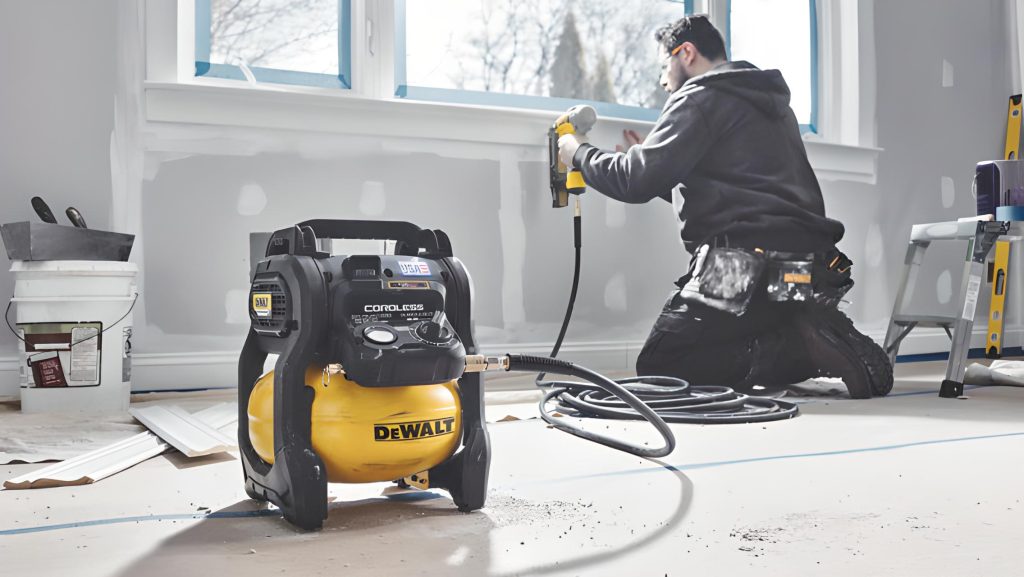
A few key specs make for a better overall product when looking for cordless air compressors for sale. Airflow, air pressure and tank capacity are the main factors determining how much grunt you get with connected air tools. Airflow is measured in litres per minute (LPM) and numbers hovering around 30L/min at a set air pressure of 8 bar (116PSI) are enough to spin smaller tools. Some units can reach maximum bursts of 140 PSI (9.6 bar) for more demanding use, although for shorter periods, allowing you to hook up bigger tools. Both airflow and pressure depend on tank size, and any cordless unit with a tank of 5 litres or more should tick most boxes. Where prices are don’t deviate too much between brands, always go with bigger numbers to get more performance.
Battery compatibility is another thing to consider. Check which batteries and battery lines from the same manufacturer can be used. For instance, 40V Makita compressors take Makita batteries with the same voltage, but may not work with 18V batteries. Other manufacturers go a different route and use twin 18V or 24V batteries in their compressors for more output and longer run times.
Lastly, while all cordless units are simple designs and easy to use, they still have the basics done right. Almost all have a single-turn knob to regulate air pressure and analogue gauges presenting correct tank and outlet readouts. The tools are built around sturdy frames that help protect them against impact and knocks, so will last in more demanding settings. All brands have done their homework in pitching capable tools, so the only remaining factors besides the price are overall dimensions and weight.



Comments are closed.