
Contents
Whether you’re a hobbyist or a new enthusiast who wants to learn this art, choosing the right pottery wheel for creating ceramics is one of the most important things you need to do. Even though it seems like a simple tool, the truth is that this clay wheel can easily turn satisfaction into frustration, even for experts. The poor choice of wheel, poor power and materials can certainly ruin your experience, which is why you should be careful when searching for the right one.
Things to Consider When Choosing the Right One
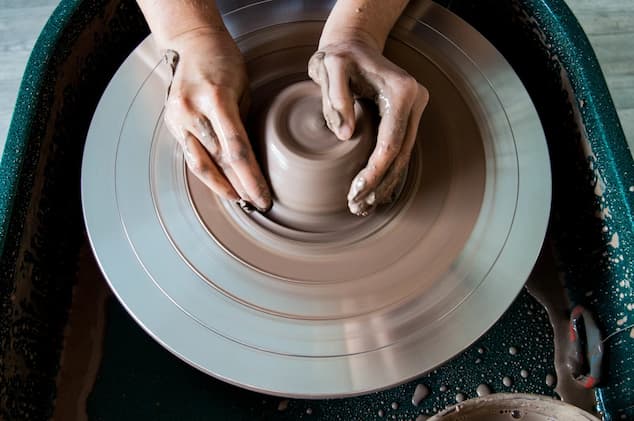
Power
The choice of a good and responsive pottery wheel is closely related to its power. The wheel’s power, on the other hand, is measured in torque, which is basically the force that can cause an object to rotate around the axis. Even though manufacturers basically describe the power of their wheels in horsepower (HP) and the amount of clay the wheel can take, the truth is completely different. For instance, motors with the same HP rating can have different torque ratings depending on the type of motor. This means that some 1/3 HP-rated motors can produce more torque than models with a 1 HP rating.
On the other hand, the amount of clay that can be centred on a wheel is basically tied to the potter’s (artist’s) skill level, and the listed amounts on the manufacturer’s list are basically based on the competition’s clay listings.
All in all, there’s no industry standard for torque ratings, so when searching for the right wheel, consult with the supplier whether the wheel can handle the amount of clay shown in the photo. If it can, then you can buy it and enjoy its work with joy.
Size
The ideal dimension for beginner-friendly wheels is a wheel head with a diameter of 25–33 cm, so you can work without feeling like it’s hard to control. But aside from the wheel head’s dimension, you shouldn’t forget about its weight. Generally speaking, these wheels weigh about 20 – 30kg, which is heavy enough to keep them stable, but light enough to move around. But you shouldn’t forget to move it. If you plan to move the wheel from one spot in the room to another or even to other places or studios, you should consider choosing a smaller, lighter wheel.
Noise
Unlike in the past, new models of wheels are very quiet, so you won’t have to worry about the wheel making an unbearable or annoying noise. In fact, some potters prefer their wheel to make a sound as it helps them feel its speed. However, if the wheel you’ve bought makes too much noise, it might be a sign of a problem with the motor or its bearings, so you must return it if it’s under warranty.
Stability
When in the search for the right wheel for clay, you certainly shouldn’t forget about its stability. While all of the aforementioned things matter, stability also matters. So, if you feel that the wheel somehow vibrates, flexes or feels unsettled when loaded, this means that it isn’t stable. Unfortunately, this will negatively affect you and your work, as you won’t be able to learn the basics and important techniques for improvement. Ideally, you should look for a wheel with a stable frame and good overall weight because this is crucial for keeping the wheel stable.
Features
Different manufacturers and different models offer different features. To find the right model for you, first you need to weigh down your needs and budget, then browse through the models in order to find the one for you. For instance, some manufacturers and models can take pride in their removable wheel heads, which make cleaning easier and faster. Others can take pride in their electronic speed controller, built-in breaker, intelligent microprocessor-based control system for smooth and precise control, ergonomic, remote or fixed foot pedal.
Customer Service and Warranty
Given that this is a piece of equipment that you’ll work with daily, you should think of its durability, longevity and warranty. So, when searching for the right one, make sure to look for one that comes from a store that offers service and a good warranty in case something happens to it. There’s nothing more frustrating than having to go through endless phone calls and not being able to return or service your wheel only because you haven’t read the store’s warranty and service policy.
When choosing the right wheel, be sure to check the warranty and what it actually covers. Ideally, you should look for a store/manufacturer that covers the replacement parts as well as the labour to install them. This can save you a lot of money in the long run, especially if the warranty is longer.
Choosing the right pottery wheel comes down to understanding your needs, skill level, and the type of projects you plan to create. A well-chosen wheel not only helps you develop your skills with confidence but also provides a reliable foundation for years of creative work.


Comments are closed.